

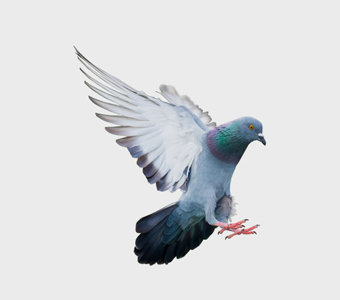
Domesticated by man
The feral pigeon, sometimes referred to as the street pigeon are pigeons that originally descended from the wild rock dove ( Colombia livia ) which were domesticated by man then escaped to turn feral and become the feral pigeon. Rock doves roost and nest on the high cliffs along the seashore and that is why feral pigeons are so adaptable to high building ledges and roof crevices.
Feral pigeons can be a pest species in urban and rural areas where they can cause problems to public health and safety as well as cause serious damage to crops, fruit and vegetables. They can cause zoonotic diseases through ectoparasites and excrement. Feral pigeons have been known to carry such diseases as psittacosis and chlamydiosis.
It is estimated that a feral pigeon can eat about 64lbs of food per year. With an estimated population of 18 million feral pigeons in the UK this is a real problem when it comes to public health and crop damage. The cost to remove pigeon fouling from UK streets is estimated to be £15 million per year.
The Wood Pigeon
Nesting feral pigeons in buildings can cause many other problems such as Secondary Pest Insect Infestation (SPII). This is when birds bring nesting material back into roofs and loft spaces which then become ideal habitats for SPII species such as Bird Mite ( Dermanyssus gallinae ) to breed as well as variegated carpet beetle ( Anthrenus verbasci ), pigeon fleas ( Ceratophyllus columbae ) and flies which will in turn produce maggots. You really can not afford any of these species to establish a foothold in your home or at your business premises!


