

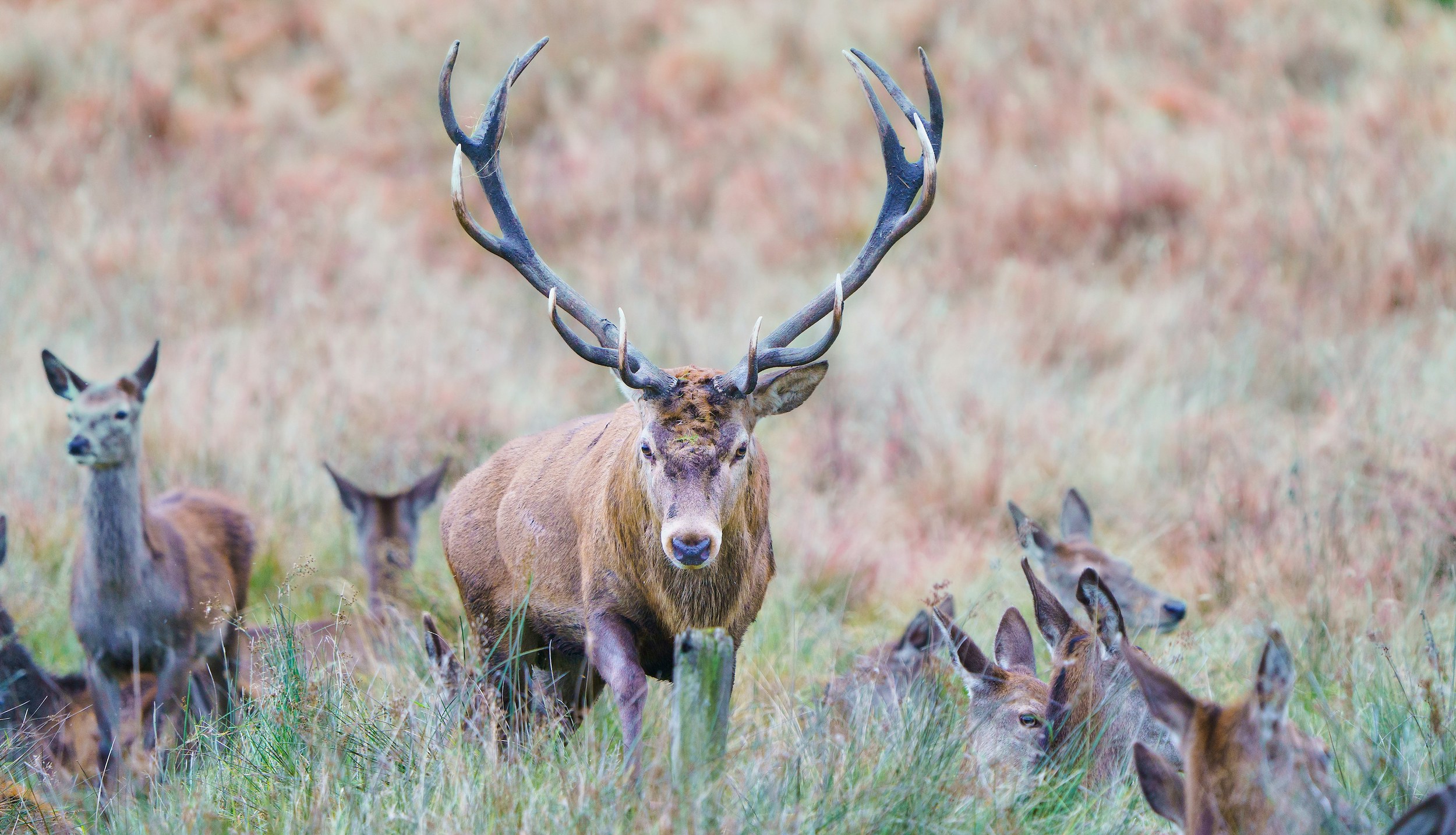
Deer
There are six species of deer to be found in the UK. The two native deer species in the British Isles are the Red deer ( Cervus elaphus) and the Roe deer ( Capreolus capreolus ). The other 4 species of deer have either been introduced or have escaped from deer parks and estates.
These are the Fallow deer ( Dama dama ), Japanese Sika ( Cervus nippon ), Reeves Muntjac ( Muntiacus reevesi ) and the Chinese Water Deer ( Hydropotes inermis ).
The current figure for deer numbers in the UK is estimated to be around 2 million. This is higher than any other time on record and is most probably down to a number of factors such as escaped species in the First and Second World War years when land was not being managed as before. Another reason was after the 1914- 1918 war it was realised that the UK depended desperately on our timber from other parts of the world, so after WW1 it was decided that more
Woodlands
Woodland and forestry should be planted in the UK for self sufficiency. Over time this linked massive areas of land and counties together creating wooded corridors in which deer could colonise. With heavier machinery use and less people working agricultural land deer numbers also were able to increase also with urbanisation spreading to rural areas and the increase of the human population deer and other mammals are adapting to survive ever close and even in our built up areas and towns.
The financial cost to forestry and agricultural damage in the UK by deer is estimated to be upwards of £9 million. Deer vehicle collisions are estimated at £17 million + and there are reported to be 74,000 deer related traffic accidents every year, which contribute to a number of human deaths and more than 400 car occupants are reported in car accidents with deer per year. It is also reported by the AA that 42, 000 deer are killed on the road due to collisions with vehicles every year.


